Ask Clinton: Older Horse Expectations
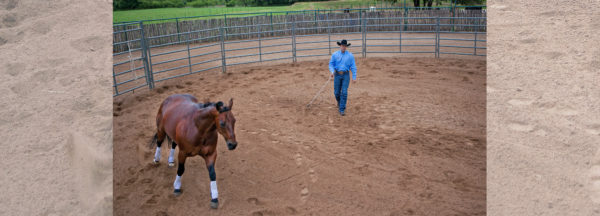
Q: I have a 23-year-old Quarter Horse that is very pushy on the ground and can be disrespectful. I started working him in the roundpen, but since he’s older and out of shape, I’m not sure if I should ask him to canter. He’s a fancy, high-stepping old man and really hates to keep that pace. I’m afraid of pushing him too hard at his age. He’s healthy, but older. – Tina M.
A: Unless I’m working with a really young horse, I ask all horses to canter in the roundpen starting with the first lesson. Cantering the horse will help you earn his respect and get him to catch on to the exercise faster. In order to earn a horse’s respect and get him to use the thinking side of his brain, you have to control his feet. It’s especially important to get a horse like the one described above, one that’s pushy and disrespectful, to canter. From the way you described your horse, it doesn’t surprise me that he hates to canter – lazy, pushy horses often do. If the horse runs out of air, just try to find a good spot to stop the lesson and come back an hour later and see if you can make some more improvement.
When you’re first teaching roundpenning to the horse, it’s OK to let him trot around a few circles to allow him to get comfortable with the roundpen and figure out where the fence is. Then ask him to canter by first pointing in the air with your hand to signal him to move forward. If he doesn’t canter, cluck to him with your tongue, and then if he still isn’t cantering, spank the ground with your whip. If that doesn’t get him cantering, then start spanking his hindquarters with the whip. Don’t release the pressure until you see a change in his feet. The lazier the horse, the more aggressive you may have to be in the beginning to get him to take you seriously. You may have to spank this horse on the hindquarters a few times before he canters. Do what you have to do to get the job done. Do it as easy as possible, but as firm as necessary.
When you’re working with a horse like this, it’s important that you quit him before he quits you. That means you need to ask him to stop before he decides to on his own. The first day, you may have to be happy with the horse taking one canter stride when you point. The next day, you can expect two or three strides at a time. Just continue to build on it.
Now, I’m not telling you to run this horse into the ground by forcing him to canter 45 minutes straight. If he’s out of shape, you have to use common sense and not work him to exhaustion. I guarantee once you get his feet freed up, you’ll be amazed at the change in his attitude and increased respect for you.
