Training Tip: Horses That Run Through a One Rein Stop
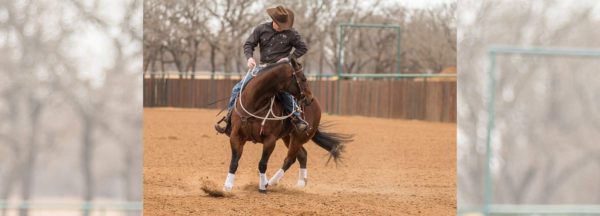
Here’s a scenario that’s common for a lot of riders: They’re riding their horse on the trail and the horse spooks and takes off. When they do a One Rein Stop to regain control of the situation, the horse bends his head to the side, but keeps running sideways.
When you do a One Rein Stop correctly, your horse should not be able to keep running sideways; he should come to a complete stop. If your horse is doing this to you on the trail, the first thing I recommend is going back and practicing a million One Rein Stops in the arena until both you and your horse are so confident at doing them that it’s second nature. Your horse should be so good at a One Rein Stop that when you slide just two fingers down the rein he immediately comes to a complete stop.
Also, when you pick up on the rein, be sure that you’re pulling it to where the seam of your jeans meets your belt. This is a “power position” and will give you leverage if the horse pulls against you. If you only pull the rein to your knee or halfway up your thigh, you won’t have the leverage to stop your horse.
In addition to One Rein Stops, practice the exercise Yield to a Stop to get better control of your horse’s hindquarters. When you ask him to stop, your horse is not disengaging his hindquarters, which is why he’s able to run sideways. Practicing Yield to a Stop will teach him to step across with his hind legs. Doing this Fundamentals exercise, you’ll trot or canter the horse forward and then slide your hand down one rein to flex the horse’s head. At the same time, you’ll press with your leg back by the horse’s flank and have the horse drop down to a walk and disengage his hindquarters 360 degrees.
I realize that practicing nothing but One Rein Stops or Yield to Stop for the next two or three rides, or even for several weeks, until you and your horse get good at them sounds really boring, but it’s crucial for your safety and being able to control dangerous situations.
