Foal Training Progression
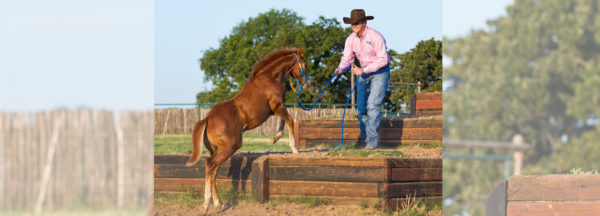
There’s nothing better than working with a foal and watching him mature and grow into himself. Clinton is often asked how he progresses a young horse’s training, from imprinting to starting the horse under saddle. Here’s his rule of thumb:
From the time your foal is born until you wean him at 4 to 6 months of age, he should know everything in the Foal Training Kit, which is basically the Fundamentals Kit modified for young horses. He doesn’t need to be perfect at each of the exercises, but he must be able to do each one well enough to receive a B+.
Then after he’s weaned, you can start getting pickier with the Fundamentals and also start working on the groundwork exercises in the Intermediate Kit with him.
I personally imprint all of my foals and then start taking them through the exercises in the Foal Training Kit. On average, it takes roughly six weeks to take a foal through the series. Once the foal knows the series, then I turn him out in a pasture and review the exercises every couple of weeks until he’s weaned.
When it’s time to wean him, I’ll bring him up to the barn and then spend several weeks refining the Fundamentals and teaching him the Intermediate groundwork exercises. Once he knows the Intermediate groundwork exercises, I’ll turn him back out in the pasture, reviewing the exercises every couple of weeks.
When he gets to be a yearling, I’ll start the roundpenning exercises with him. I don’t worry about teaching him the groundwork exercises in the Advanced Kit until I’m ready to start him under saddle.
Learn more about training a young horse in our training resource Young Horse Development.
